
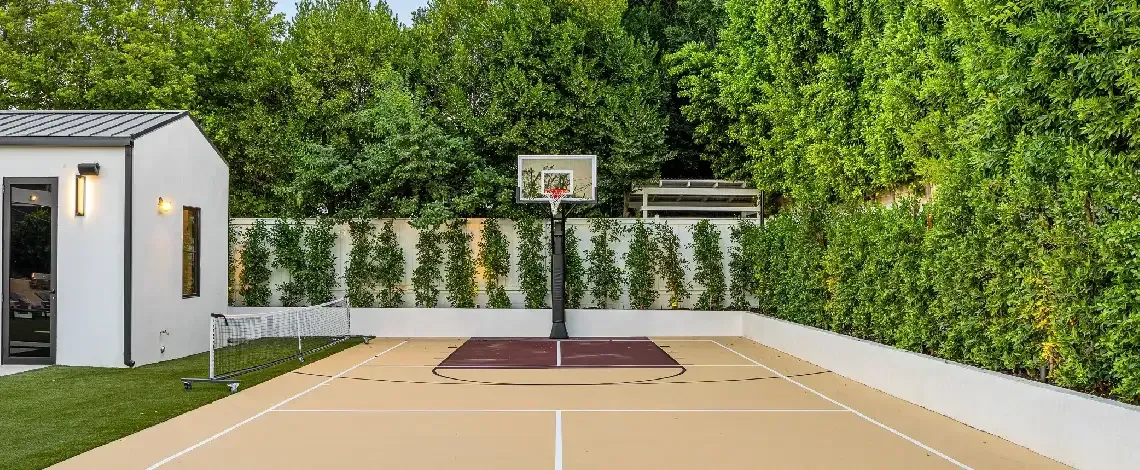
Which Sport Court Is Right for Your Northern Utah Backyard?
Jeremy Vai • August 25, 2026
A professional sports court installation in Utah gives homeowners a dedicated space for basketball, pickleball, and everyday recreation. In Northern Utah, a court needs more than a finished playing surface, as ground preparation, drainage, base construction, and layout all affect its performance over time. ElmWood Landscape builds sport courts with a focus on stable foundations, clear court markings, and dependable use through changing seasons.
A well-planned court can become one of the most-used parts of a backyard. It gives families a place to play, practice, stay active, and spend more time outdoors without leaving home. The right design should fit the property, support the activities you enjoy, and connect naturally with the rest of the outdoor space.
Choosing the Right Court for Your Backyard
The right court depends on the available space, the sports your family plays most often, and how you plan to use the area over time. Some homeowners want a dedicated court for a single activity, while others prefer a flexible space that accommodates several games. Reviewing the property before construction helps determine the best placement, dimensions, and layout.
Before planning a court, it helps to consider:
- Available backyard space and access points
- The sports your family will use most often
- Existing slope, drainage, and water flow
- Sun exposure during expected play times
- Whether a single-sport or multi-use design makes more sense
A court should not feel crowded into the yard or sit in an area where water naturally collects. Proper planning helps create a space that is easier to use and less likely to develop long-term surface concerns. It also helps the court fit better with patios, walkways, landscaping, and other outdoor features.
Pickleball Courts for Northern Utah Homes
A pickleball court installation in Ogden can create a convenient space for casual games, family activities, and regular practice. Pickleball courts need a level, properly prepared surface so the ball plays consistently and the area remains comfortable to use. Clear court striping also makes the space more functional for players of all experience levels.
A pickleball court plan should account for:
- Available court space and surrounding clearance
- Slope and drainage conditions
- Court placement within the backyard
- Access from the home and other outdoor areas
- Surface preparation and final court markings
A dedicated pickleball court works well for homeowners who want a defined playing area built around one activity. It can also be part of a larger outdoor project that includes landscaping, hardscaping, or outdoor living improvements. Planning these elements together can create a more organized and intentional backyard layout.
Basketball Courts for Everyday Play
A backyard basketball court can be designed for shooting practice, casual games, or regular family use. The size and layout should reflect how the court will be used, whether that means a smaller shooting area or a larger recreational space. A properly installed foundation helps maintain a level and consistent playing surface.
A basketball court can be planned around:
- The size of the available backyard area
- The type of play the household prefers
- Court placement and access
- Grading and drainage requirements
- Accurate line marking for a clean finished layout
Basketball courts receive frequent foot traffic and repeated impact, which makes proper base construction especially important. A stable foundation supports the court surface and helps reduce issues caused by settling or uneven ground. Accurate court markings also help create a cleaner, more usable finished space.
Multi-Use Sport Courts Offer More Flexibility
A backyard sport court in Northern Utah can also be designed as a multi-use recreation space. This type of court allows homeowners to enjoy basketball, pickleball, and other activities in one organized area. It is a practical option for families who want flexibility without having to build separate play spaces around the yard.
A multi-use court may be a good choice when:
- Family members enjoy different sports
- Backyard space is limited
- You want one area for several activities
- The court will be used by children, teens, and adults
- You want a flexible recreation feature for the property
The layout should still be carefully planned so that the court remains easy to use. Clear markings, proper dimensions, and a stable surface help keep the area organized. A professional design can help balance versatility with long-term performance.
Why Site Preparation Matters
The visible surface is only one part of a successful sports court installation. The work underneath the court plays a major role in stability, drainage, and consistent performance. Without proper preparation, outdoor courts can develop water issues, surface wear, and uneven areas over time.
ElmWood Landscape follows a structured installation process that includes:
- Site Review and Layout Planning
The area is evaluated to determine the court size, placement, and positioning. - Ground Preparation
The site is cleared and shaped to support proper grading and base installation. - Base Construction
A compacted foundation is built to support surface stability and long-term performance. - Layer Installation
Structural materials are added to help create strength and durability beneath the finished surface. - Surface Application and Marking
The final playing surface is completed and marked with clear, accurate court lines.
Proper site preparation helps create a court tailored to the intended use of the space. It also helps support stable performance through changing temperatures, snowmelt, rain, and regular activity. This work is one of the most important parts of creating a court that holds up year after year.
Keeping Your Court Ready for Use
Sport courts are designed for regular activity, but basic upkeep can help preserve the surface and keep the area ready for play. Routine cleaning helps remove dirt, leaves, and debris that may collect on the court. Periodic surface checks can also help identify small concerns before they become larger problems.
Helpful court maintenance habits include:
- Clearing leaves, dirt, and loose debris
- Watching for standing water after rain or snowmelt
- Checking for surface wear or uneven areas
- Keeping nearby landscaping from spreading onto the court
- Addressing drainage concerns early
A properly installed court should provide a dependable area for consistent use with minimal ongoing maintenance. Keeping the surface clean and monitoring drainage can help support long-term performance. The goal is to protect both the court surface and the foundation below it.
Build a Court Around How You Play
A sport court should be built around your property, your preferred activities, and the way your family uses the backyard. Whether you are planning a pickleball court, basketball court, or multi-use recreation space, proper preparation makes a meaningful difference in the finished result. ElmWood Landscape can help create a court that is functional, durable, and designed for regular use.
Our team installs sports courts for residential and commercial properties throughout Ogden and Northern Utah. We focus on proper grading, stable base construction, accurate layout, and dependable surface performance.
Contact us to discuss your sports court installation project.